Choosing the right Electric Sofa in 2026 requires more than comparing prices or counting USB ports. Global buyers need dependable motion systems, durable upholstery, clear certifications, and responsive after-sales support. A sofa may look impressive in a showroom, yet fail when its motor overheats or replacement parts become unavailable. That risk deserves attention.
Furniture industry analyst Jerry Epperson offers a useful principle: “Furniture must earn its place through comfort, quality, and lasting value.” This idea guides our review of the leading Electric Sofa manufacturers serving international markets. We examine frame construction, motor performance, reclining noise, control design, packaging, warranty terms, and production capacity. We also consider practical details, such as whether a power cable reaches a wall outlet without stretching across a living room.
Real experience matters here. Buyers should request load-testing data, fabric samples, installation instructions, and service response times. Certifications should be verified, not simply printed in a brochure. Small omissions can become expensive problems.
Not every manufacturer performs equally.
Some suppliers offer polished designs but limited customization. Others provide strong engineering with weaker communication. That difference becomes important across borders, where shipping damage, voltage requirements, and local service networks can affect ownership.
This 2026 guide introduces top Electric Sofa manufacturers for global buyers. It aims to support careful sourcing, not rushed purchasing. The rankings may not suit every project, and that is worth admitting. A hotel, apartment developer, retailer, and private homeowner may need completely different solutions. Evaluate the evidence, test the comfort, and question every convenient promise.
The electric sofa industry is moving from occasional luxury toward practical home comfort. Grand View Research valued the global smart furniture market at approximately USD 2.3 billion in 2023. Its outlook projects double-digit annual growth through 2030. Electric sofas support this trend through quiet motors, USB charging, adjustable headrests, and integrated controls. Yet, market figures vary because research firms classify powered recliners differently.
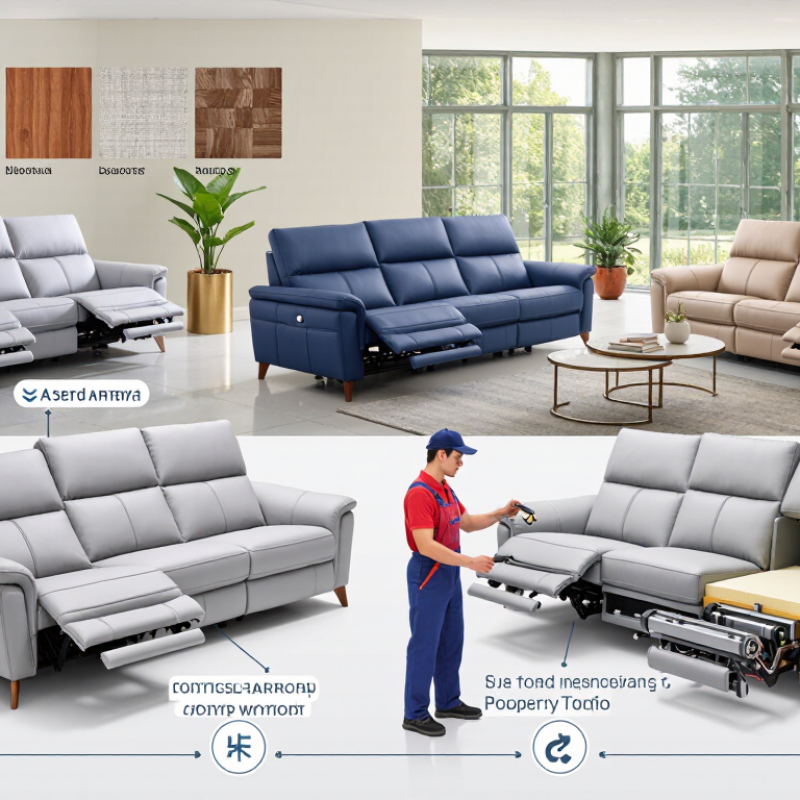
The main product categories include dual-motor recliners, power lift sofas, massage and heat models, modular sectionals, and electric sofa beds. Dual-motor designs adjust the backrest and footrest independently. Lift sofas target users needing easier standing support. Modular sectionals suit larger living rooms, but their wiring requires careful planning. Sofa beds add flexibility, although their mechanisms can reduce seating comfort.
According to the 2024 Furniture Market Outlook from Technavio, demand is influenced by urban housing, online retail, and aging populations. Buyers should compare motor noise, foam density, fabric durability, voltage compatibility, and replacement-part access. Check safety documentation.
The details matter.
A sofa may look advanced but feel unstable. Some models also consume more standby power than expected. Shipment damage remains another concern for global buyers, especially with heavy frames and exposed controls. Supplier audits, sample testing, and clear warranty terms provide stronger evidence than attractive product photographs. Industry reports offer useful direction, but their category boundaries remain imperfect and deserve careful review.
In 2026, evaluating an electric sofa manufacturer requires more than checking photographs and quoted prices. In supplier assessments, I examine the frame, reclining mechanism, motors, wiring, and upholstery separately. A stable frame should resist movement when two adults sit and recline together. Motors should operate smoothly, without sharp noise, hesitation, or sudden stops. Ask for cycle-test records, load limits, material specifications, and inspection photographs.
Electrical safety deserves close attention. Manufacturers should provide test reports from qualified laboratories and documentation suitable for each target market. Check plug options, voltage compatibility, overheating protection, and cable quality. A reliable supplier explains these details clearly instead of hiding behind general certificates. Product traceability also matters. Serial numbers, batch records, and documented quality checks make later investigations faster.
After-sales support often separates a capable factory from a risky purchase. Review warranty terms, replacement motor availability, repair instructions, packaging strength, and response times. Request a production sample before placing a large order. Sit on it, measure the recline angle, listen to the motor, and inspect the underside. Small defects become expensive across a container.
Leading electric sofa manufacturers for global buyers are judged by more than motor speed or showroom appearance. Grand View Research valued the global furniture market at about USD 516.7 billion in 2022, with continued growth expected through 2030. This wider market signals strong demand, but electric sofa figures vary because reports classify recliners, massage seats, and modular systems differently.
Look for manufacturers with documented testing, stable supply chains, and clear warranty terms. A reliable factory should explain motor cycles, load limits, noise levels, fabric abrasion results, and replacement-part availability. Ask for inspection records before shipment. Check voltage options carefully, especially for mixed-market orders. Small details matter: a loose USB port or poorly protected cable can create costly returns.
Sustainability also deserves practical attention. The International Energy Agency reports that global electricity demand continues to rise, making standby efficiency increasingly relevant. Choose sofas with low-power adapters, replaceable control units, and separable upholstery. Manufacturer experience should include export packaging, moisture protection, and multilingual manuals. Certifications help, but they are not proof of every claim. Some suppliers still present attractive laboratory figures without explaining test conditions. That deserves questioning. Fancy stitching means little if the frame flexes after repeated use.
Reliable electric sofas begin with controlled movement and honest specifications. Look for quiet motors, reinforced steel frames, high-resilience foam, and smooth reclining from sitting height. Dual-motor designs can adjust the backrest and footrest independently. Useful details include wall-hugging mechanisms, USB-C charging, emergency lowering, and battery backup during short power interruptions. Ask for cycle-test results, weight limits, noise readings, and upholstery abrasion data. Marketing photos cannot replace these records.
Certifications should match the destination market, not merely the factory location. Responsible manufacturers can provide current reports for electrical safety, electromagnetic compatibility, restricted substances, and furniture strength. Depending on the country, buyers may also need fire-performance testing for foam and coverings. Check the test laboratory, report number, product model, and expiry status. ISO 9001 supports process control, but it does not prove that every sofa is safe. That distinction matters.
Customization may cover seat width, foam firmness, stitching, fabric, leather alternatives, control placement, plug type, voltage, and packaging. Ask for a signed technical drawing before production. Confirm carton dimensions and replacement-part availability; both affect warehouse costs. A sample should complete repeated reclining tests before approval. Small defects often appear late, especially uneven gaps or loose cables. I have found that a clear inspection checklist prevents more disputes than attractive promises. Still, checklists are imperfect, and suppliers should welcome corrective feedback instead of hiding it.
2026 Top Electric Sofa Manufacturers for Global Buyers
Global buyers should assess electric sofa manufacturers through documented production experience, not attractive catalog images. A factory visit, video audit, or third-party inspection can reveal frame quality, motor testing, and upholstery consistency. Ask for load-test records, wiring diagrams, material certificates, and export references. These details support more reliable sourcing decisions. However, certification requirements vary by destination, so importers should verify local electrical and furniture regulations independently.
Pricing needs a complete cost model. Compare EXW, FOB, and delivered quotations carefully. Include tooling, packaging, inland transport, duties, insurance, and payment charges. A low unit price can hide weak cartons or expensive replacement parts. Request a sample before volume production. Samples cost time, but they often expose uncomfortable differences in stitching, noise, and reclining speed. Forecasts are never perfect.
Logistics planning should include carton dimensions, container loading plans, production lead times, and port congestion risks. Manufacturers with export experience should provide accurate packing lists and damage-control procedures. After-sales support matters even more for motorized furniture. Confirm warranty duration, remote troubleshooting, spare motor availability, wiring instructions, and response times. Keep critical parts locally when possible. A clear claim process helps. Still, some suppliers promise faster support than they can deliver, so test communication before signing a large order.
Comparative sourcing benchmarks for established electric sofa production segments. Prices are indicative manufacturer-level ranges in USD and may change according to upholstery, mechanism, order volume, testing requirements, and destination.
| Manufacturer Segment | Typical Production Region | Main Product Configuration | Indicative EXW Price per Seat | Typical MOQ | Production Lead Time | 40-Foot Container Capacity | Common Compliance and Testing | Warranty and Spare Parts Support | Logistics and Export Capability |
|---|---|---|---|---|---|---|---|---|---|
| High-volume export manufacturer | East and South China | 2- or 3-seat power reclining sofas with USB charging and cup holders | US$260–520 | 20–50 units per model | 35–55 days after deposit and sample approval | Approximately 95–125 seats, depending on packing method | RoHS and CE-related component documentation; electrical safety testing available on request | 12–24 months limited structural and electrical warranty; common motors and switches usually stocked | Experienced with FOB, CIF, and DDP quotations; export cartons and palletized loading commonly available |
| Mid-market customized manufacturer | Coastal China and Vietnam | Fabric or top-grain leather reclining sofas with multiple color and console options | US$420–850 | 30–100 units per color or configuration | 45–65 days, including upholstery and finish confirmation | Approximately 80–110 seats | REACH and RoHS material declarations; UKCA, CE, or market-specific files may be arranged | 12 months standard warranty; paid replacement parts commonly supplied for 2–5 years | Can consolidate mixed SKUs; suitable for distributor programs and private-label packaging |
| Premium leather specialist | Italy, Spain, Portugal, and selected Asian facilities | Full-grain or corrected-grain leather power seating with quiet mechanisms and adjustable headrests | US$900–2,200 | 10–30 units per configuration | 60–100 days | Approximately 45–75 seats | Leather traceability, flammability testing, electrical safety reports, and market-specific chemical compliance | 2–5 years limited warranty depending on mechanism and upholstery; formal service procedures are typically available | Usually shipped by FOB or FCA; export packaging is stronger, but freight cost per seat is higher |
| Hospitality and contract furniture producer | North America, Europe, and Southeast Asia | Heavy-duty power recliners for cinemas, clubs, hotels, and entertainment venues | US$650–1,450 | 25–100 seats per project | 50–90 days after approved shop drawings | Approximately 55–90 seats | Commercial flammability, durability, load, EMC, and electrical testing based on destination market | 1–3 years project warranty; maintenance manuals and replacement actuator programs commonly offered | Project-based delivery schedules, site coordination, and container or partial-container shipment support |
| Value-oriented domestic-market exporter | China, Türkiye, and selected Southeast Asian markets | Basic dual-motor recliner sofa with PU, microfiber, or standard fabric upholstery | US$180–360 | 50–150 units | 30–50 days | Approximately 110–145 seats | Basic electrical documentation; additional destination-country testing may be required | 6–12 months limited warranty; spare parts are generally available while the model remains active | Competitive FOB pricing and high loading efficiency; model continuity should be confirmed before ordering |
| Modular sectional sofa manufacturer | China, Vietnam, and Eastern Europe | Configurable L-shaped or U-shaped sectional with independent power seats | US$380–780 per seat module | 20–60 complete sets | 45–75 days | Approximately 55–90 complete sectional sets | Material compliance declarations, electrical safety files, packaging drop tests, and optional abrasion testing | 12–24 months for mechanisms; replacement covers and modular components may be ordered separately | Flat-pack or knock-down options reduce cubic volume; mixed-container loading is often possible |
| Smart-home integrated manufacturer | China, South Korea, and selected European facilities | Electric sofa with app, wireless remote, USB-C, ambient lighting, or smart-home integration | US$520–1,150 | 50–200 units, depending on software customization | 60–100 days, including firmware and compatibility validation | Approximately 70–105 seats | EMC, wireless, RoHS, CE, FCC, or UKCA documentation depending on connectivity and destination | 12–24 months; remote troubleshooting and firmware support should be contractually defined | Requires battery, adapter, and wireless documentation; air shipment restrictions may apply to lithium batteries |
| Reclining mechanism specialist | China, Taiwan, South Korea, and Europe | Power recliner platforms supplied to sofa assemblers and furniture manufacturers | US$95–260 per mechanism or seat module | 100–500 mechanisms | 25–60 days for repeat orders | Capacity depends on mechanism packaging; approximately 1,000–2,000 units per 40-foot container | Motor, actuator, load-cycle, EMC, and electrical safety test documentation | 12–36 months for motors and actuators; technical diagrams and service kits are commonly supplied | Suitable for OEM integration; buyers must verify compatibility with frame dimensions and upholstery designs |
| European small-batch design manufacturer | Poland, Lithuania, Portugal, and Spain | Contemporary electric sofas with custom dimensions and premium textile selections | US$750–1,800 | 5–20 units per model | 55–90 days | Approximately 45–80 seats | EU chemical, textile, electrical, and flammability documentation; testing varies by destination | 2 years commonly offered; regional service partners may reduce replacement lead times | FCA, DAP, and truck delivery within Europe are common; ocean export is available for larger orders |
| North American retail-program manufacturer | United States, Mexico, and Canada | Power reclining sofas designed for retail, warranty, and replacement-part programs | US$700–1,600 | 10–50 units per SKU | 45–80 days, subject to material availability | Approximately 50–85 seats | UL, FCC, flammability, electrical, and retailer-specific compliance documentation may be available | 1–5 years by component; domestic service networks and parts fulfillment are stronger than overseas alternatives | Shorter regional transit times and easier returns; unit costs may be higher than Asian sourcing options |
Buyer checklist: Before placing an order, confirm motor voltage, plug type, upholstery composition, carton dimensions, tested load rating, container loading plan, Incoterm, production sample approval, warranty exclusions, spare-parts pricing, and destination-market electrical and flammability requirements.
Inspect the frame, reclining mechanism, motors, wiring, and upholstery separately. The frame should remain stable when two adults recline together. Small movement matters.
Request cycle-test records, load limits, noise measurements, and inspection photographs. The motor should move smoothly without sharp noise, hesitation, or sudden stops. Test it yourself.
Check voltage compatibility, plug options, cable quality, and overheating protection. Ask for qualified laboratory reports suitable for each target market. General certificates are not enough.
Serial numbers, batch records, and quality-check documents help identify problems quickly. They can reveal whether one defect affects a small batch or a wider shipment. Details matter.
Request a production sample, then sit on it and test every reclining position. Measure the recline angle, listen to the motor, and inspect the underside. A polished sample may not represent mass production.
Review warranty terms, replacement motor availability, repair instructions, packaging strength, and response times. Confirm whether control units and other parts can be replaced separately. Support can disappoint.
Check moisture protection, corner reinforcement, internal padding, and cable protection. Poor packaging can damage excellent engineering before delivery. Inspect packed samples when possible.
Not necessarily. Compare the price with test evidence, inspection records, service capacity, and replacement-part access. A cheap sofa can become expensive after repeated returns or repairs. I would still compare carefully.
Certifications provide helpful evidence, but they do not confirm every product claim. Ask about test conditions, standby power, replaceable controls, and separable upholstery. Some claims need more questioning.
This guide provides a practical overview of the 2026 Electric Sofa industry, including major product categories such as reclining sofas, lift-up models, massage sofas, modular designs, and smart-connected seating. It explains how global buyers can evaluate manufacturers by examining product quality, production capacity, material selection, innovation, factory management, communication efficiency, and consistency in delivery. Special attention is given to features such as power mechanisms, control systems, upholstery choices, comfort design, safety performance, certifications, and customization capabilities for different markets.
The article also explores key considerations for international sourcing, including price structures, minimum order quantities, sample development, packaging, shipping methods, lead times, and import documentation. Buyers will learn how to compare suppliers more effectively, reduce purchasing risks, and establish dependable long-term cooperation. In addition, the guide highlights the importance of responsive after-sales support, spare-parts availability, warranty policies, and clear solutions for installation or product issues, helping businesses make informed decisions in the competitive global furniture market.

ZoomRoom