Choosing the best dining table starts with how your home actually works. Do you host long dinners, help children with homework, or eat beside a sunny window? These routines matter as much as color or style. Dining Tables should fit the room without blocking chairs, walkways, or the cabinet you open every day.
Interior designer Nate Berkus has said, “Your home should tell the story of who you are, and be a collection of what you love.” It is a useful idea when choosing a table: the right piece should feel personal, but also work in daily life. A solid oak rectangle may suit a busy family, while a small round table can soften a tight breakfast nook. Neither shape is automatically better.
This guide will help you compare table shapes, sizes, materials, and finishes. Measure the room, then mark the table’s footprint with painter’s tape. Pull out a chair. Walk around it. Small test, big help. Consider how many people usually sit down, and whether guests need extra space on holidays. A glass top may brighten a dim room, but fingerprints show quickly. Wood can feel warm and forgiving, though its finish needs care. There is no perfect table for every home. And measurements are easy to misread. A thoughtful choice balances comfort, durability, and appearance, leaving enough room for everyday movement and the occasional crowded meal.
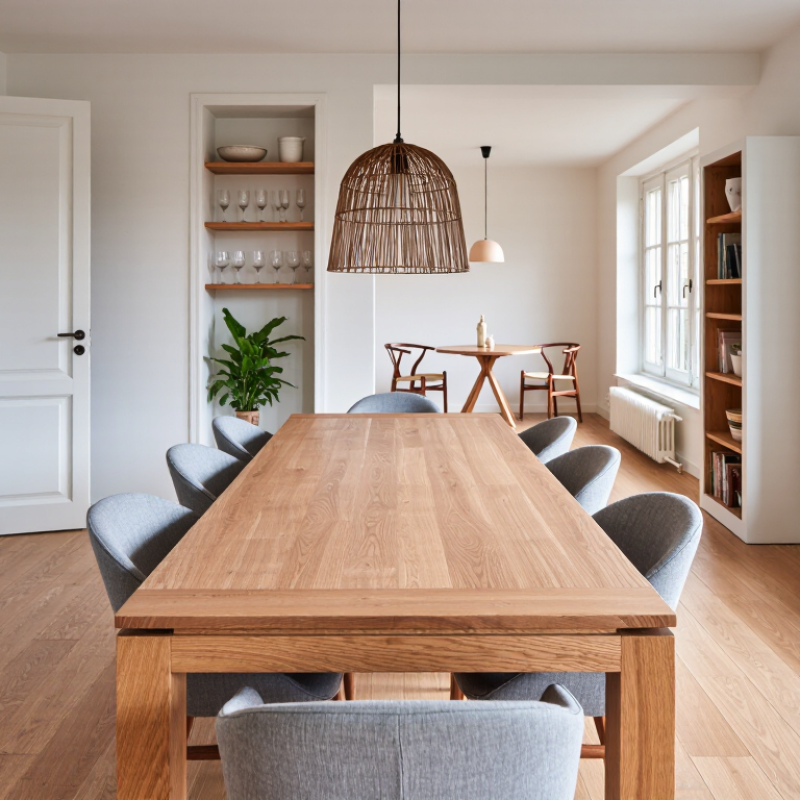
Start with the room, not the table. Measure the dining area, then mark a table’s footprint on the floor with painter’s tape. Pull out imaginary chairs and walk around them. Can someone reach the kitchen without turning sideways? Measure twice. A table that fits on paper may still interrupt the path to the patio or leave a chair pressed against a wall.
Household size helps, but routines matter more. The U.S. Census Bureau’s 2016–2020 American Community Survey reported an average U.S. household size of 2.54 people. That national figure is context, not a seating plan. Think about weeknight meals, homework, guests, and whether anyone needs extra elbow room. A compact round table can make conversation easier in a tight room; an extendable table may suit occasional gatherings. I’ve found that the “extra” chair often becomes a laundry shelf. Not ideal, but worth considering.
Round tables encourage conversation because everyone can see one another, and their lack of corners helps in compact rooms. A 36-inch round table can seat four, while a 48-inch version offers more elbow room. Larger round tables may feel awkward if diners must reach across the center. Small rooms benefit.
Rectangular tables suit narrow dining areas and larger households. Allow about 24 inches of table edge per person, then check whether chairs can slide back without hitting a wall. A table around 36 inches wide usually leaves space for shared dishes. For six people, a length near 72 inches is a common starting point, not a strict rule. Chair width and serving style change the fit.
Square tables work well in square rooms, especially for two or four diners. But adding seats can quickly crowd the corners. Oval tables soften a long layout while keeping much of a rectangular table’s seating capacity. Measure twice. Leave roughly 36 inches between the table edge and nearby walls or furniture when possible; busy walkways may need more. A paper outline on the floor can reveal problems a showroom glance misses. I’d once assumed a smaller tabletop always meant more usable space. In practice, bulky chairs and awkward traffic paths can take it away.
A dining table takes more wear than its appearance suggests. It may hold hot serving dishes, homework, and a glass that leaves a damp ring. Solid hardwood can be repaired and refinished, but it may move slightly as humidity changes. Engineered wood with a durable veneer can cost less and stay dimensionally stable, though deep scratches are harder to disguise. Feel the edges. A thin, uneven veneer or rough underside can hint at rushed construction.
Look closely at how the top meets the legs. Bolted or well-fitted joinery is generally easier to tighten than joints held only by staples or weak glue. Give the table a gentle push; wobbling is worth investigating before purchase. Check whether the finish feels smooth and consistent, especially around corners and seams, where moisture can work its way in. Ask what cleaning products the finish tolerates, since harsh cleaners may dull some surfaces. I might choose a few small marks over a delicate finish that demands constant caution. Still, the room’s humidity, household habits, and repair options matter, so there is no single material that suits every home.
Comparing wood hardness can help you choose a tabletop for everyday use.
Janka hardness measures the force needed to embed a steel ball halfway into wood. Higher values generally indicate greater resistance to dents, but the finish, construction, and care also affect a table’s performance. Values shown are typical ratings in pounds-force (lbf).
A dining table should feel connected to the room, not simply match its color. Look at the floor, wall finishes, and nearby furniture before choosing a style. A pale oak table can soften a room with dark cabinets, while a black metal base may echo slim window frames. Notice the shapes, too. Rounded edges often suit relaxed, curved interiors; clean rectangular lines can feel more at home in orderly spaces. Small details matter.
Material helps set the mood. Solid-looking wood brings warmth and visible grain, while glass can keep a compact dining area feeling open. In a rustic room, a table with a gently worn finish may look natural beside textured fabrics. For a contemporary interior, a simple silhouette can prevent visual clutter. But matching every finish too closely can make a room feel flat. A little contrast is often more convincing.
Before deciding, place a sample or a similarly colored object near the table’s intended spot. Check it in morning and evening light. Measure the space with chairs pulled out; a beautiful table can still obstruct the route to the kitchen. Leave room to move. It is easy to focus on photographs and overlook daily habits, such as homework or serving dishes. That first impression may need a second look.
| Interior Style | Table Style to Consider | Suitable Materials | Shape and Size Guidance | Color and Finish | Practical Consideration |
|---|---|---|---|---|---|
| Scandinavian | Simple design with tapered legs and clean lines | Light-colored oak, ash, or birch; wood veneer can be a lower-cost option | A round table works well in compact rooms; a rectangular table suits longer spaces | Natural wood tones, matte finishes, and restrained contrast | Choose a visually light design to keep a small or bright room feeling open. |
| Modern Minimalist | Streamlined table with a simple base and little ornamentation | Solid wood, glass, metal, or a combination of materials | Rectangular or oval shapes suit open layouts; leave clear space for chairs and circulation | Neutral tones, smooth surfaces, and consistent finishes | Check that the base leaves enough legroom and does not obstruct seating positions. |
| Farmhouse | Substantial table with a trestle, pedestal, or sturdy four-leg base | Solid wood or durable wood veneer | A rectangular table complements a long dining area; an extension leaf adds flexibility | Natural, stained, or lightly distressed wood finishes | Inspect the finish and construction if the table will see frequent family use. |
| Traditional | Classic profile with shaped legs, a pedestal base, or decorative detailing | Solid hardwoods or quality wood veneer | Rectangular tables work well in formal rooms; round pedestal tables can simplify seating | Medium to dark wood tones or carefully coordinated painted finishes | Match the table’s visual weight to the room and surrounding furniture. |
| Industrial | Robust design combining a straightforward top with a metal or architectural base | Wood, metal, or wood paired with steel | Rectangular shapes often suit loft-style rooms and shared dining areas | Natural wood, darker stains, and matte metal finishes | Use floor protectors beneath metal legs to help prevent scratches on hard flooring. |
| Coastal | Relaxed, uncomplicated design with a light visual presence | Light-toned wood, painted wood, or woven details used as accents | Round or oval tables can soften a compact dining nook; rectangular tables suit larger rooms | Pale natural finishes, white, or soft muted colors | For sunny rooms, consider how direct light may affect wood color and surface finishes over time. |
| Mid-Century Modern | Low-profile silhouette with tapered legs and a balanced, sculptural shape | Wood, wood veneer, or mixed materials | Oval or rectangular tables can echo the style’s streamlined proportions | Warm wood tones with a smooth, understated finish | Measure chair clearance around angled legs before choosing a table for a tight space. |
A dining table’s cost is more than its price tag. Include chairs, delivery, and the care its surface may need over time. A lower-cost table can be a sensible choice, especially for a first home or a room that gets light use. But compare construction, not just appearance. Check whether the legs feel steady and whether joints seem securely fitted. Wobble matters.
Think about daily maintenance before choosing a finish. A busy household may prefer a surface that wipes clean easily after spilled juice or sticky fingerprints. Natural wood can develop marks and change tone with sunlight; that character appeals to some people, but it is not maintenance-free. Ask what cleaning products and routine care the material requires. Small chores add up.
Durability depends on how the table will actually be used. A compact household may not need a heavy, expandable table built for frequent large gatherings. Measure the room with chairs pulled out, and leave enough space to walk past comfortably. It is easy to focus on the tabletop and overlook the edges, where bags, toys, or chair backs may bump it. There is no perfect trade-off: paying more for resilience only makes sense if the table suits your space and habits.
Measure the room and mark the table’s footprint with painter’s tape. Add space for pulled-out chairs and walking paths. Try the layout for a day.
Start with everyday routines, not household averages. Consider weeknight meals, homework, guests, and elbow room. An extra chair may become a laundry shelf.
A compact round table can make conversation easier in tight spaces. An extendable table helps with occasional gatherings. Check that it does not block doors or walkways.
A durable, easy-to-clean finish may suit busy households with spills and sticky fingerprints. Natural wood can gain marks or change tone in sunlight. That may be charming, or annoying.
Check the edges, underside, finish, and joints. Push gently to test for wobbling. Rough surfaces or uneven veneer deserve a closer look.
Solid hardwood can often be repaired or refinished, but humidity may cause slight movement. Engineered wood with veneer can be stable and less costly. Deep scratches may be harder to hide.
Include chairs, delivery, and future care, not just the price tag. A lower-cost table can work well for light use. Construction still matters.
Match its size and finish to your habits, room, and cleaning routine. Ask which products the surface tolerates. There is no perfect trade-off.
Choosing the best dining table begins with understanding your room and the people who will use it. Measure the available space, allow enough room to pull out chairs and move around comfortably, and consider how many people usually dine together. Then compare shapes and sizes: round tables can encourage conversation in compact areas, while rectangular or oval options may suit longer rooms or larger gatherings. The right choice should fit both your floor plan and your everyday routines.
Consider how the table’s material and construction will stand up to regular use, including spills, heat, and frequent cleaning. Its finish, color, and shape should also complement your home’s interior without sacrificing comfort or practicality. When comparing Dining Tables, look beyond the initial price: factor in maintenance, sturdiness, and how well the table may serve your household over time. A thoughtful balance of space, style, durability, and budget can help you choose a table that feels right for everyday meals and special occasions alike.

ZoomRoom