A Fabric Sofa is an upholstered seat covered in woven or knitted textile rather than leather or another smooth material. Its feel, appearance, and upkeep depend on the specific fabric, construction, and finish. Cotton and linen often feel breathable and natural, while polyester blends can offer practical resistance to everyday wear. Wool brings warmth and texture, though it may need more careful cleaning. No single option suits every home.
The best type depends on how the sofa will be used. A busy family room may benefit from tightly woven, stain-resistant fabric and removable cushion covers. For a quieter space, a softer weave or richer texture might matter more than easy spot cleaning. Pets, sunlight, children, and cleaning habits all influence what works in practice. Small details count. Check the care label, test fabric samples in your room, and look closely at seams and cushion support. A beautiful swatch can feel different across a full sofa. That is easy to overlook.
This guide explains common fabric choices, their strengths, and their trade-offs, then considers which sofa type may suit different needs. It also looks at comfort, durability, maintenance, and style without treating one feature as decisive. Price alone is not a reliable measure of quality, and “easy-care” does not mean maintenance-free. The right choice is usually a balance. It may take a little more thought than expected.
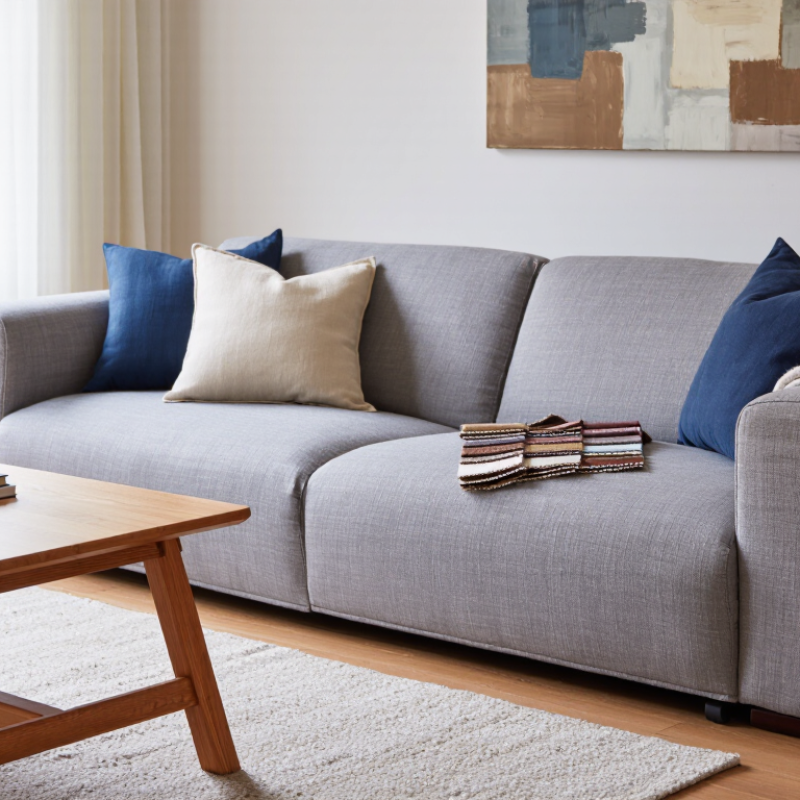
A fabric sofa is a seating frame covered with textile upholstery and cushioning. The frame may be wood or metal; fabric describes the visible covering, not the sofa’s internal structure. Common upholstery textiles include cotton, linen, wool, polyester, acrylic, and blends. Each feels and behaves differently. A linen weave may feel cool and slightly uneven, while a tightly woven polyester can feel smoother and resist everyday marks.
Look closely at the cover. It may be fixed or removable, and beneath it sit padding layers that shape the seat and back. The fabric’s weave, fiber, backing, and finish all affect how it handles friction, sunlight, and spills. No single fiber guarantees a durable sofa. Seams, cushion construction, and care habits matter too. A small detail, but an important one.
For a performance reference, the Association for Contract Textiles’ Upholstery Fabric Performance Guidelines use 30,000 Wyzenbeek double rubs as a benchmark for woven upholstery fabric in demanding settings. This is a laboratory abrasion result, not a promise of years of service. ACT also cautions that abrasion tests do not reliably predict real-world lifespan. A household with pets or frequent guests may need a tighter weave and practical cleaning instructions, rather than an impressive test number alone. Even then, wear can be uneven. That is worth considering.
A sofa usually begins with a kiln-dried timber or metal frame. Elastic webbing or metal springs support the seat. High-resilience foam creates the main cushion. Polyester fiber or cotton-like batting softens the edges. It is layered construction.
Fabric panels must align across the arms, seat, and back. A few millimeters of error can create wrinkles or uneven piping. Small details become visible quickly. Good upholstery needs careful handwork.
Tightly woven polyester usually handles daily activity well. It resists snagging and hides light wear. Loose weaves may trap crumbs and pet hair. They can feel attractive, though practicality may suffer.
Linen can feel cool and airy against the skin. However, it creases more easily with regular use. Its relaxed appearance may become messy. That is not always a defect.
Test a fabric swatch for snagging with a fingernail or soft brush. Inspect the weave closely. Avoid very loose textures when pets shed heavily. Hair may settle between the threads.
Removable covers can make cleaning easier. Washing may cause shrinking or a different fit. Check the care label before purchasing. Convenience has limits.
Sit on the sofa for several minutes, not just a few seconds. Notice heat, firmness, roughness, and back support. A showroom may hide problems under bright lighting. First impressions can mislead.
No test can fully predict everyday family use. Laboratory results may not reflect children, pets, crumbs, or repeated sitting. Use test data as guidance. It is not a promise.
Not necessarily. Recycled fibers may reduce demand for new resources. Microfiber shedding, chemical finishes, transport, and disposal still matter. The answer remains incomplete. Think about the sofa’s entire life.
A Fabric Sofa is a seating piece covered with woven or knitted textile rather than leather, giving it a soft feel and a wide range of colors, textures, and styles. It is typically made by building a strong frame, adding supportive springs or webbing, shaping the cushions with foam or other filling materials, and attaching the chosen upholstery fabric. Common options include cotton, linen, polyester, microfiber, velvet, and blended fabrics, each offering different levels of softness, breathability, stain resistance, and visual appeal.
The best fabric depends on how the sofa will be used. Durable synthetic blends and microfiber are often practical for busy households because they resist daily wear and are relatively easy to clean. Cotton and linen provide a natural, comfortable feel but may require more careful maintenance, while velvet creates a richer appearance and needs gentle care. When choosing a Fabric Sofa, consider household activity, pets or children, cleaning requirements, room style, cushion support, and long-term durability to find the most suitable balance of comfort and practicality.

 ZoomRoom