Choosing a coffee table is rarely about appearance alone. Global buyers must balance room size, material durability, shipping weight, safety, and local preferences. This guide, “Top 10 Types of Coffee Tables for Global Buyers,” examines practical choices for apartments, hotels, offices, and family homes.
The selection includes wooden, glass, nesting, lift-top, storage, round, oval, ottoman, pedestal, and outdoor coffee tables. Each type solves a different problem. A lift-top design can support remote work, while nesting tables save space beside a compact sofa. Glass creates visual lightness, but it demands careful packaging and impact testing. Solid wood offers warmth and strength, although moisture can cause movement during overseas shipping.
“Good table design begins with the user’s daily movement, not the showroom photograph,” says Elena Morris, a furniture sourcing consultant specializing in Table For Coffee products. Her comment reflects a practical buying lesson. Buyers should measure sofa height, walking clearance, carton dimensions, and assembly requirements before placing orders. Small details matter. A sharp corner may concern families. A low table may frustrate older users. A heavy marble top may look premium, yet increase freight costs significantly.
No category wins every room. Even experienced buyers sometimes prioritize style too quickly. That mistake deserves attention. Reliable sourcing also requires checking finish consistency, hardware quality, packaging protection, and applicable product standards. The following overview compares each coffee table type through these real-world factors, helping international buyers make clearer decisions without treating trends as permanent rules.
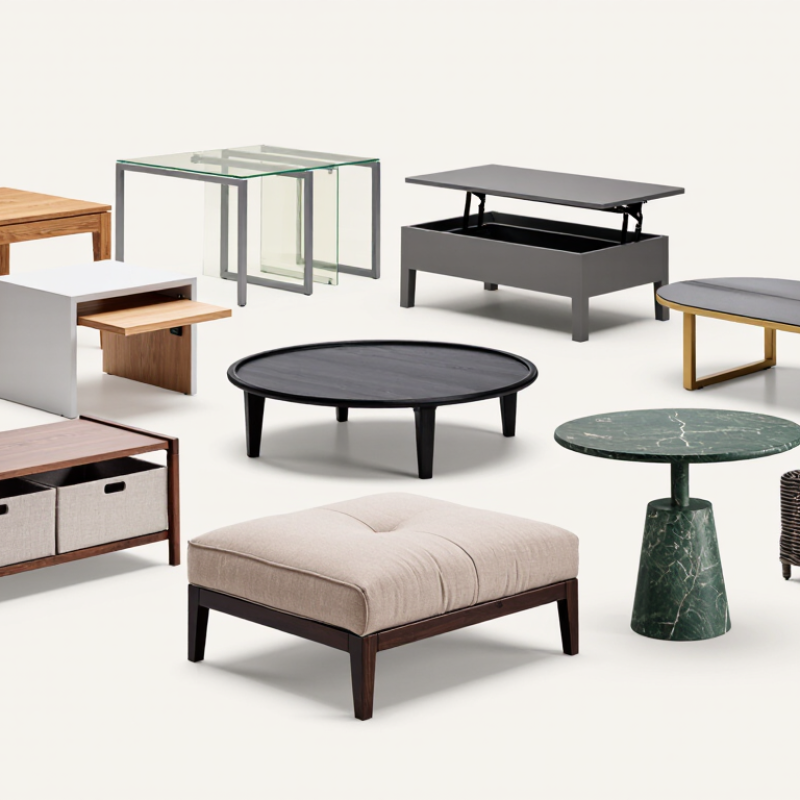
Coffee tables are not merely decorative anchors. They shape circulation, comfort, and daily use. The ten common types include rectangular, square, round, oval, nesting, lift-top, storage, ottoman, C-shaped, and trunk-style tables. Each requires a different selection method.
Start with dimensions. Measure the sofa, walking paths, and door clearance before choosing a table. A practical table length is about two-thirds of the sofa’s width. Keep roughly 40–45 centimeters between the table and seating. The tabletop should sit slightly below the sofa cushion. These figures are useful, but not universal. Deep sofas, low seating, and family rooms may need adjustments.
Shape controls movement. Round and oval tables soften tight corners and reduce sharp edges. Rectangular designs suit longer sofas and larger rooms. Nesting tables offer flexible surface area without permanent bulk. Lift-top and storage tables support laptops, meals, and small apartments. An ottoman can replace a hard tabletop, but trays may be needed for drinks. The global furniture market was valued at approximately US$516.66 billion in 2022, according to Fortune Business Insights’ furniture market report. That scale reflects demand, not guaranteed quality. Materials, joinery, weight, and tested stability still matter.
Tips: Use masking tape to mark the tabletop footprint. Walk around it with a full tray. Check whether knees hit the edge. Review BIFMA performance guidance where applicable, especially for moving parts. A table can look perfect online and feel awkward at home. Recheck measurements twice.
Rectangular coffee tables remain the most practical choice for many living rooms. Their long surface follows sofas neatly and leaves clear walking space at both ends. A 120-centimeter table often suits a standard three-seat sofa, but room measurements matter more than fixed rules. Leave about 40 to 45 centimeters between the table and seating for comfortable movement. I have found that sharp corners can feel formal, especially in homes with children.
Square coffee tables create a balanced center in compact seating arrangements. They work well with four chairs or an L-shaped sofa, giving every seat similar reach. However, a square table may interrupt narrow walkways. Check door swings and circulation before ordering. Small errors become annoying every day. Storage shelves can help, but low shelves may collect dust and scattered toys.
Round and oval coffee tables soften rooms with strong lines. A round design suits smaller spaces because it has no corners to catch clothing or knees. Oval tables provide more surface length while keeping a gentler outline. This makes them useful beside long sofas or in family rooms. Consider tabletop height, edge finish, and base stability, not only appearance. A thin top may look elegant, yet it can feel fragile during daily use. My own preference changes by room; visual beauty sometimes loses to easier cleaning and safer movement.
Standard retail dimensions vary by region and design, but these representative measurements reflect commonly used coffee table sizes for global residential interiors. Measurements are shown in centimeters.
Rectangular and oval tables typically offer longer surface areas, while square and round tables provide balanced proportions for compact seating arrangements.
For global buyers, space-saving coffee tables solve real problems in compact homes, serviced apartments, and flexible workspaces. Nesting tables offer the most adaptable arrangement. Keep them stacked beside a sofa, then separate them when guests arrive. Different heights create useful layers for drinks, books, and small lamps. Measure the largest table carefully. A wide tabletop can still make a small room feel crowded.
Folding coffee tables suit buyers who value easy storage and shipping efficiency. Their legs should lock firmly and open without excessive force. Check the hinge quality, tabletop thickness, and packed dimensions before placing a bulk order. In my experience, a lightweight frame is convenient, but it may feel unstable on uneven floors. Load testing matters more than appearance alone. It is easy to underestimate this detail.
C-shaped coffee tables slide under sofas and beds, bringing a work surface close to the user. They are practical for laptops, snacks, and reading. Choose a base with enough clearance for different sofa depths. Rounded edges may reduce bumps in busy homes. However, very narrow bases can tip when users lean on the tabletop. I once overlooked this risk. It changed how I compare stability, finish quality, and assembly instructions. Buyers should also confirm moisture resistance, carton protection, and clear installation guidance for different markets.
Coffee tables now serve more than decoration. Fortune Business Insights valued the global furniture market at about US$516.66 billion in 2023, with continued growth expected through 2032. This wider market trend supports practical furniture that saves space and performs several tasks. Storage coffee tables hide remotes, books, and children’s toys behind drawers or liftable panels. They work well in compact apartments, but poor ventilation can make enclosed storage feel dusty.
Lift-top tables suit remote workers and casual dining. Their adjustable surface can rise near sofa height, reducing awkward bending during laptop use. Check the hinge strength, tabletop stability, and clearance behind the sofa. Small details matter.
Ottoman coffee tables add softness and flexible seating. Choose firm foam and stain-resistant upholstery for busy homes. A soft ottoman may look inviting, but it can become impractical without a flat tray.
Tips: Measure the sofa, walking paths, and rug before ordering. Leave roughly 40–45 centimeters between the table and seating for comfortable movement. Tray tables are especially useful for renters because removable trays simplify serving and cleaning. According to the American Home Furnishings Alliance, consumers increasingly value multifunctional home products, although preferences vary by region and household size. Treat these figures as directional, not absolute. Real rooms can contradict reports. Test the table’s height with your actual sofa, because showroom proportions often mislead.
For global buyers, coffee tables are no longer one-style products. Material choice affects durability, freight weight, care, and perceived value. Grand View Research valued the global furniture market at approximately USD 766 billion in 2023, with online purchasing supporting wider material comparisons. Wood remains practical and warm, especially oak or walnut finishes. It can hide small scratches, but unstable humidity may cause movement. That detail is easy to underestimate.
Glass creates visual lightness in compact apartments. Tempered glass is safer for daily use, although fingerprints demand frequent cleaning. Metal supports slim frames and industrial designs. Powder-coated steel resists everyday wear, but poor finishing can still corrode near coastal environments. Stone offers strong visual authority. Marble and travertine feel premium, yet their weight raises shipping costs and installation risks. Fortune Business Insights reports continued growth in the global furniture sector, but logistics data suggests heavier products face greater handling pressure.
Mixed-material tables often balance these weaknesses. A wooden top with a metal frame feels stable without appearing bulky. Glass paired with stone can look refined, though the joint quality matters more than the photograph. Buyers should request material thickness, edge treatment, packaging tests, and replacement-part policies. Ask for real samples.
No material wins every room. I would test the table beside a sofa, under local lighting, and against actual cleaning habits. Sustainability claims also need evidence; the 2024 Global Forest Resources Assessment reports ongoing pressure on forest resources, so certified wood deserves closer inspection. Mistakes happen. A beautiful table can still be impractical.
| Coffee Table Type | Primary Material | Typical Dimensions (L × W × H) |
Typical Weight | Indicative Price Range (USD) |
Durability Profile | Maintenance Requirements | Best Interior Styles | Key Buyer Considerations |
|---|---|---|---|---|---|---|---|---|
| 1. Solid Wood Rectangular Table | Oak, ash, walnut, or rubberwood | 110–140 × 55–75 × 38–48 cm | 20–40 kg | $180–$900 | High resistance to everyday use; can be refinished if scratched. | Use coasters, wipe spills promptly, and avoid prolonged direct moisture or heat. | Traditional, rustic, Scandinavian, contemporary | Check moisture content, joint construction, wood certification, and finish consistency. |
| 2. Reclaimed Wood Farmhouse Table | Reclaimed timber with steel or wood base | 100–140 × 55–75 × 35–45 cm | 25–50 kg | $220–$1,000 | Generally robust, with natural marks and surface variation. | Dust regularly; use a protective finish and keep away from standing water. | Farmhouse, industrial, rustic, lodge | Expect variation in knots, color, dimensions, and surface texture; verify pest treatment. |
| 3. Tempered Glass Top Table | Tempered glass with wood or metal frame | 100–130 × 50–70 × 38–46 cm | 15–30 kg | $150–$700 | Tempered glass offers improved impact resistance compared with ordinary glass. | Clean with a soft cloth and non-abrasive glass cleaner; protect edges from hard impacts. | Modern, minimalist, transitional | Confirm glass thickness, safety treatment, edge finishing, load rating, and protective packaging. |
| 4. Nesting Coffee Table Set | Wood, metal, glass, or a combination | Large table: 80–110 × 50–70 × 38–45 cm | 15–35 kg per set | $160–$750 | Flexible arrangement, although smaller tables may have lighter frames. | Maintain even floor contact and avoid dragging tables across hard surfaces. | Small-space, contemporary, apartment living | Measure nesting clearance, table stability, floor protection, and the weight of each component. |
| 5. Metal Industrial Table | Powder-coated steel, stainless steel, or aluminum | 100–140 × 55–75 × 38–48 cm | 18–40 kg | $180–$850 | High structural strength; powder coating helps protect carbon steel from corrosion. | Wipe dry after cleaning and inspect exposed edges for coating damage or rust. | Industrial, loft, modern, urban | Check corrosion resistance, weld quality, coating thickness, and floor-protection pads. |
| 6. Marble or Natural Stone Table | Marble, granite, travertine, or slate | 90–130 × 50–70 × 35–45 cm | 40–90 kg | $400–$2,000 | Very stable and heat resistant, but some stones are porous or vulnerable to staining. | Use a suitable sealer, wipe acidic spills quickly, and avoid abrasive cleaners. | Luxury, classic, contemporary, Mediterranean | Consider slab thickness, stone porosity, color variation, edge profile, and shipping weight. |
| 7. Sintered Stone or Ceramic Table | Sintered stone, porcelain, or ceramic slab | 100–135 × 55–75 × 36–46 cm | 30–65 kg | $350–$1,500 | Strong resistance to heat, stains, ultraviolet light, and everyday abrasion. | Clean with mild soap and water; protect corners from concentrated impact. | Minimalist, modern, luxury, outdoor-inspired | Verify impact testing, substrate support, slab thickness, corner protection, and installation method. |
| 8. Lift-Top Storage Table | Engineered wood, solid wood, metal hardware | 100–130 × 50–70 × 42–62 cm | 25–45 kg | $180–$850 | Good utility; hinges and lifting mechanisms determine long-term performance. | Do not overload the top; lubricate hardware when required and keep mechanisms free of dust. | Family rooms, practical modern, compact homes | Check internal storage volume, hinge cycle rating, child-safety gaps, and tabletop load capacity. |
| 9. Mixed Wood-and-Glass Table | Wood veneer or solid wood with tempered glass | 105–135 × 55–75 × 38–48 cm | 18–35 kg | $200–$950 | Combines a warm frame with a visually light surface; glass requires edge protection. | Clean wood and glass with separate suitable products; avoid abrasive contact between components. | Scandinavian, transitional, contemporary | Inspect glass supports, silicone pads, frame alignment, and compatibility of wood finishes. |
| 10. Round or Oval Mixed-Material Table | Wood, metal, glass, stone, or composite combinations | Diameter 80–110 cm × 35–48 cm high | 15–45 kg | $160–$1,200 | Rounded edges reduce sharp corners; stability depends on base geometry and center of gravity. | Use felt pads, keep the base level, and follow the care instructions for each material. | Contemporary, soft minimalism, hospitality, family spaces | Confirm base stability, usable surface area, shipping dimensions, and suitability for high-traffic rooms. |
Choose a table about two-thirds of the sofa’s width. This is only a guide. Measure the room and walking paths first. A 120-centimeter table may suit a three-seat sofa, but layouts vary.
Leave roughly 40–45 centimeters for comfortable movement. Check door clearance and walking routes too. Use masking tape first. Walk around the marked footprint with a full tray. Recheck measurements twice.
Rectangular tables usually follow long sofas neatly. Oval tables offer similar length with softer edges. They feel gentler. Check both ends of the table for clear walking space. Sharp corners may feel formal in family homes.
Round tables work well in smaller rooms because they have no corners. Oval tables provide more surface length beside longer sofas. Movement feels easier. Consider edge finish, height, and base stability, not appearance alone.
Square tables suit four chairs or an L-shaped sofa. Each seat can reach the tabletop easily. However, they may block narrow walkways. Check door swings, knee space, and nearby furniture before ordering.
Nesting tables stay stacked beside the sofa when unused. Separate them when guests need more surfaces. Different heights can hold drinks, books, and small lamps. Measure the largest table. Even stacked pieces may crowd a small room.
Confirm that the legs lock firmly and open without excessive force. Check hinge quality, tabletop thickness, and packed dimensions. A light frame stores easily, but it may feel unstable on uneven floors. Load testing matters.
Its base slides under a sofa or bed, bringing a surface close to the user. It can hold a laptop, snacks, or reading materials. Check clearance for different sofa depths. Very narrow bases may tip when someone leans forward. I once overlooked this risk.
Lift-top tables support laptops and meals, especially in small apartments. Storage tables hide everyday items, but low shelves can collect dust and toys. Ottomans provide softer seating and may need a tray for drinks. Comfort can beat appearance. Not always, though.
Choosing the right coffee table requires balancing room size, layout, lifestyle, and visual style. This guide introduces the fundamentals of selecting a Table For Coffee, including suitable dimensions, practical shapes, and placement considerations. Classic rectangular, square, round, and oval designs offer different ways to support seating arrangements, while nesting, folding, and C-shaped tables provide flexible solutions for compact homes or multifunctional spaces.
Functionality is also essential for global buyers. Storage tables help organize everyday items, lift-top models support working or dining, ottoman tables add comfort, and tray tables offer convenient serving space. Material selection further influences durability and appearance, with wood, glass, metal, stone, and mixed-material options creating distinct moods and performance benefits. By comparing structure, function, materials, and available space, buyers can choose a coffee table that combines practicality, comfort, and long-term style.
ZoomRoom